In this month’s Animal Magic column, Elijah Ford, conservation and education officer at All Things Wild based in Honeybourne, introduces its vital conservation work which is helping to bring back a beautiful butterfly to Worcestershire.
By Elijah Ford
How to save a species?
It’s no secret the animal and plant species we share our planet with are under increasing threat and, as humans, we are the only ones with the power – and responsibility – to make a meaningful difference.
This difference can come in many forms, even sometimes being as simple as just stepping away and allowing an area to heal.
But for the pearl-bordered fritillary (Boloria euphrosyne) in the Malvern Hills, this difference has to be much more hands-on.
At All Things Wild, we support conservation efforts from across the globe, from the rainforests of Argentina to villages in Tanzania, but this story is a little bit closer to home.
The striking orange and black butterfly was once found in abundance through the Malvern Hills, but in the last decade the species had become extinct in the area.
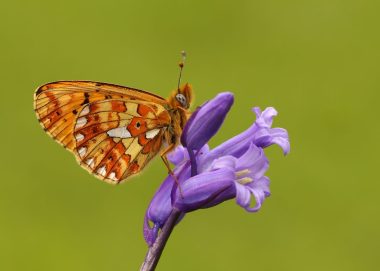
Pearl-bordered fritillary. Picture by Nigel Kiteley
This is believed to have been caused by habitat loss, with a massive decrease in the amount of available dog violets, their food of choice.
Aware of the devastating consequences of losing the species in the area, Butterfly Conservation UK created the lost fritillaries project, which aimed to restore their natural habitat and return this stunner to the hills.
This work would not only benefit the fritillary itself, but all other local species as well, as it would return to areas which previously occupied by more natural and suitable bracken but have now been overcome by uninhabitable brambles.
Over the first years of the project’s existence, it has seen great success, with 200 butterflies released between spring 2022 and 2023, with these numbers continuing to grow.
Over this past summer, studies have shown the butterfly has started to reproduce on its own in the wild, without any human input.
While this is not enough to secure their future on its own, it is a fantastic sign.
This year All Things Wild has joined the project as a partner in breeding and maintaining the pearl-bordered fritillary habitat which is currently on the red list of Britain’s threatened species.
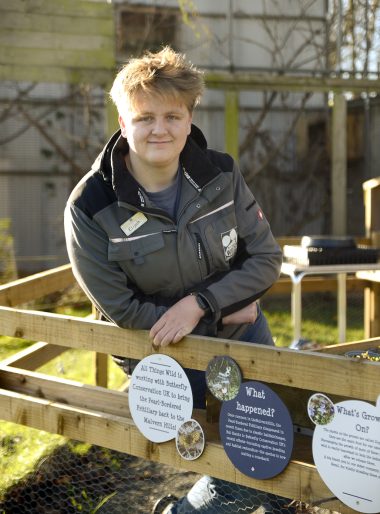
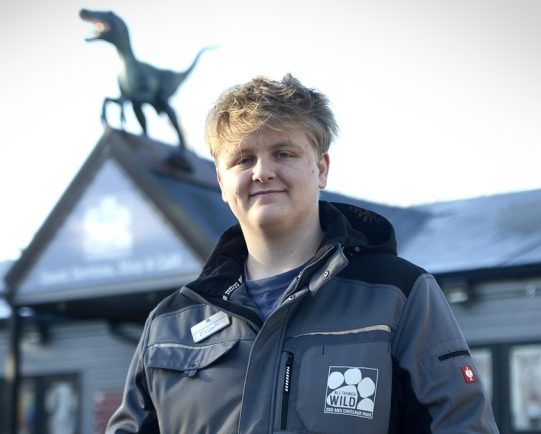
Elijah Ford from All Things Wild . Picture by Marcus Mingins 4925007MMR1
We currently have 200 caterpillars on-site, as well as over 400 dog violet plants to feed them with and are preparing to monitor our caterpillars as they soon begin their metamorphosis into butterflies.
Our aim is to not just to breed butterflies, but to also use the story as a way to inspire, to show that there is true positive change happening all around us when it comes to protecting our planet.
In recognition for our part in the project, we were shortlisted for the Great British Wildlife Restoration Award 2026, organised by the British and Irish Association of Zoos and Aquariums.
I had the honour of travelling to Speaker’s House, London, for the award ceremony last Tuesday attended by MPs, lords, and ministers.
Although we did not win, the award is about demonstrating the important role that zoos and other conservation projects play in protecting our country’s wildlife.
For the pearl-bordered fritillary, it would appear this difference is leading to a brighter future for one of our country’s most threatened butterflies.