In a significant moment for British sovereignty and national security, plans to transfer control of the British Chagos Islands to Mauritius have been halted, following mounting opposition at home and abroad.
Reports indicate that proposed legislation underpinning the deal will not appear in the upcoming King’s Speech, marking a decisive pause in a policy that had stirred widespread concern across the United Kingdom.
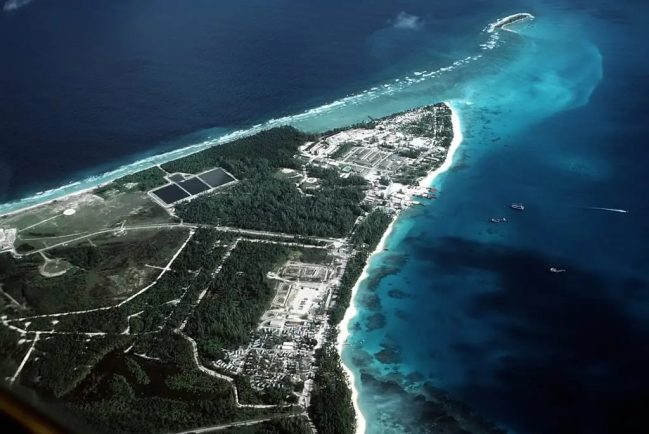
The proposed agreement would have seen Britain relinquish sovereignty over the sixty British Chagos Islands to Mauritius, only to lease back one of the islands, Diego Garcia, for 99 years.
Diego Garcia remains one of the most important joint UK-US military bases in the world, playing a central role in global security operations, including recent activity linked to tensions involving Iran.
The government had argued the deal would secure the long term future of the base, estimating costs at £3.5 billion. However, critics challenged those figures, with opposition voices suggesting the true cost could reach as high as £35 billion, while a recent court assessment placed the potential long term burden closer to £50 billion.
Crucially, the deal has faltered following a withdrawal of support from US President Donald Trump, who reportedly described the proposal as an “act of great stupidity.” Without American backing, ministers have acknowledged the agreement cannot proceed. Frustration has grown within government ranks, particularly after earlier intelligence level discussions had indicated initial US approval.
Concerns have also intensified over the legal and strategic implications of the deal. Ministers fear that Mauritius could pursue action through international courts, potentially gaining access to the waters surrounding Diego Garcia. Such a development could compromise the operational capabilities of the base, including the deployment of nuclear submarines and maritime patrols, thereby weakening a cornerstone of Western defence.
Particular alarm has been raised over the potential application of the Pelindaba Treaty, which establishes Africa as a nuclear weapon free zone. Mauritius is a signatory to the treaty, and critics warn that any transfer of sovereignty could open the door to its provisions being enforced in the Chagos Islands. In practical terms, this could restrict or even prohibit the presence, transit, or servicing of nuclear armed or nuclear powered submarines at Diego Garcia.
Defence analysts caution that such constraints would have far reaching consequences, not only limiting the United Kingdom’s ability to operate its submarine fleet in the region, but also undermining the United States’ strategic posture in the Indian Ocean. Diego Garcia has long served as a critical logistics and operations hub, and any inability to support nuclear capable vessels could significantly weaken Western deterrence in a region of growing geopolitical competition. There are also fears that legal challenges, combined with treaty obligations, could create ongoing uncertainty over access and control, complicating military planning and potentially emboldening adversaries.
The parliamentary timetable has now added further weight to the setback. If the legislation is not passed before prorogation, expected between 29 April and 6 May 2026, it will fall entirely. This means the government will be forced to reintroduce the bill in the next parliamentary session, starting the legislative process again from the very beginning, including debates, scrutiny, and potential opposition in both Houses. For critics of the deal, this represents a major victory and a crucial opportunity to halt the proposal altogether in defence of British sovereignty.
Some have suggested that ministers could attempt to rely on the Parliament Act to force the legislation through without the consent of the House of Lords. However, this route is complex, time consuming, and rarely used. It would typically require the bill to be passed in the House of Commons in two successive sessions, meaning it would not provide a quick solution and would further delay any implementation. As such, it offers little immediate prospect of rescuing the current proposal.
The decision represents yet another reversal for Sir Keir Starmer’s government, adding to a growing list of policy retreats. Critics from across the political spectrum, including senior Conservative figures and Reform UK, have consistently warned that the agreement risked undermining British sovereignty and jeopardising national security.
This opposition has not been confined to Parliament. The Great British PAC has played a prominent and sustained role in challenging the deal, launching high profile campaigns, pursuing legal action, and driving national awareness of the risks involved. The organisation has also been a key supporter of the Chagossian people, helping to amplify their voice internationally and playing a role in supporting the establishment of the Chagossian Government.
The group is set to release new polling on Monday, expected to demonstrate significant public opposition to the proposal across the United Kingdom.
Claire Bullivant, CEO of the Great British PAC, praised the growing resistance to the deal, stating:
“Britain’s sovereignty is not for sale, and the British people know it. This deal was flawed from the start, dangerous in its consequences, and rejected by the public. But beyond that, this deal rides roughshod over the rights of the Chagossian people. They must have a genuine right to self determination and a decisive voice in the future of their homeland. Their cause cannot be ignored or traded away behind closed doors. We will always stand up for our nation, our security, and for the fundamental principle that the people most affected must be heard.”
The Great British PAC has consistently argued that the agreement would have placed unnecessary financial strain on taxpayers while exposing critical defence infrastructure to legal and geopolitical uncertainty. Supporters credit its campaigns, legal challenges, and advocacy for both British sovereignty and the Chagossian community with helping to shift the national conversation.
The broader geopolitical backdrop has further complicated matters. Relations between London and Washington have deteriorated in recent months, particularly during disagreements over the Iran conflict. The United States had expressed frustration over Britain’s refusal to allow the use of its bases for initial military strikes, adding strain to an already fragile alliance.
Despite the setback, the government maintains that it still believes in the merits of the agreement and may attempt to revive discussions, though prospects appear increasingly slim. With parliamentary time running out, international support waning, and legislative hurdles mounting, the Chagos proposal now faces an uncertain future.
For many observers, this pause represents more than a legislative delay, it is a reaffirmation of Britain’s enduring commitment to protecting its sovereignty, safeguarding its strategic assets, and listening to the will of its people.