This month conservation officer Elijah Ford from All Things Wild gives an update on the lost fritillaries project which aims restore this butterfly to the Malvern Hills.
By Elijah Ford
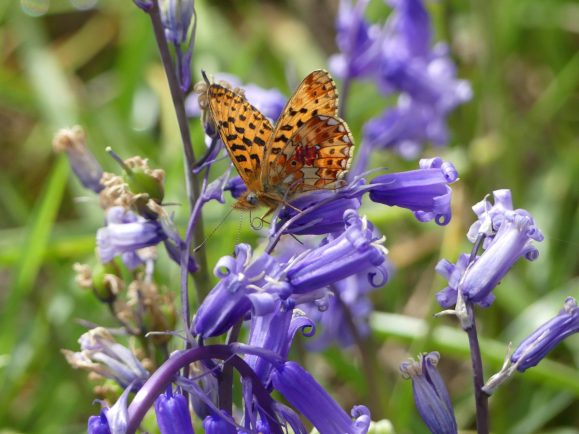
OVER the last few weeks, we released 35 pearl-bordered fritillaries onto the Malvern Hills, as part of the lost fritillaries project.
This is something we have been working towards for the last 12 months, and it is just the beginning of something very exciting.
You can learn a bit more about it in my January column, which focuses on providing a broader overview of the project itself, as well as conservation at All Things Wild as a whole.
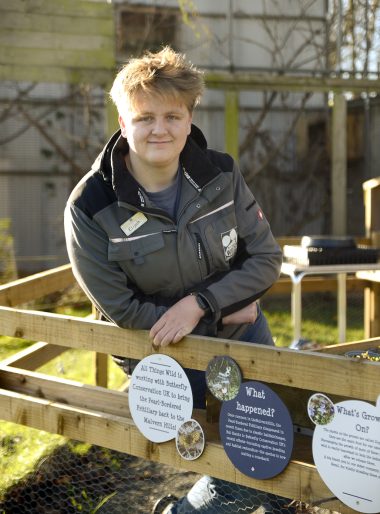
Elijah Ford from All Things Wild. Picture by Marcus Mingins 4925007MMR1
With this butterfly species being one of the UK’s most threatened, these releases have been a crucial start to raising the number of pearl-bordered fritillaries out on the hills.
We are expecting to release around 50 butterflies in total, with each one having been raised at All Things Wild over the last year or so.
Males come out first, so they are ready for all the females, which is why 29 of the winged insects we have released so far have been male.
READ MORE – How to save a British butterfly
We have butterflies emerging pretty much every day, with more coming out on days where the weather is hot and dry.
These creatures then sit in the rearing pots that they grew up in, where I then find them in the afternoon, pretty eager to get out.
I mark them with a red dot, which helps us identify captive-bred individuals, and we keep them in a netted enclosure overnight.
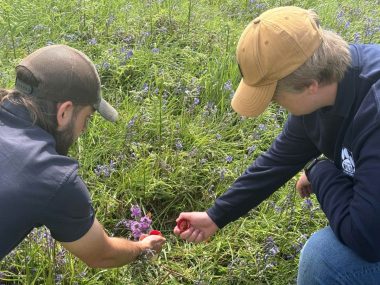
Animal manager, Matt Parker and head of conservation education, Elijah Ford. s
The next morning, we transport them across to the release site out in the hills, which has been managed over the last year to encourage the growth of dog violets, which are the sole food source of the pearl-bordered fritillary caterpillar.
These releases are for me the highlight of this project as we get to see all our butterflies take off onto the hills.
When it’s warm, they might fly off immediately or we might even see some mating, but on colder, cloudy days there is usually much less activity.
From here, we leave the butterflies to it in the hope they will breed and create a wild population of butterflies on the site next year.
We keep an eye out and record any sightings of our released butterflies after their release day, but this is pretty rare with the number that have been brought out this year.
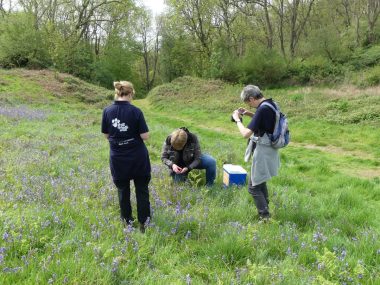
First fritillary release. s
This is only the start as next year we expect to care for around 1,000 caterpillars, five times as many as we started with this year.
This means we could see up to 450 butterflies, meaning a lot more trips to the hills for me but there are definitely worse places to spend a working day.
For regular project updates check out our Instagram account @allthingswild.conservation, and you can also visit our project HQ on site.
There is a good chance you will spot me keeping an eye out for emerging butterflies.