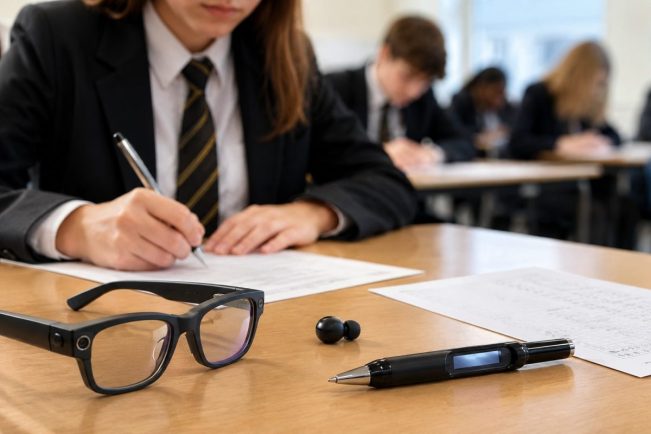
The growing use of smart technology is creating new challenges for schools and exam boards seeking to prevent cheating during GCSE and A-level examinations, England’s qualifications regulator has warned.
Sir Ian Bauckham, Chief Regulator of Ofqual, said increasingly sophisticated devices, including smart glasses, concealed earpieces and pens fitted with miniature screens, are being used by a small minority of students attempting to gain an unfair advantage in exams.
More than a million pupils are sitting GCSE and A-level examinations this summer, with schools and exam boards stepping up efforts to detect and deter malpractice.
Sir Ian said reports from schools suggest technology designed to evade detection is becoming more advanced.
Among the devices identified are smart glasses capable of displaying text visible only to the wearer, hidden earpieces used for covert communication and pens containing tiny built-in screens.
The warning comes as official figures show mobile phones and smart devices remain the most common form of exam malpractice.
According to Ofqual, there were 2,225 cases involving mobile phones and smart devices during last summer’s GCSE, AS and A-level exam series, accounting for 44.3 per cent of all student malpractice cases.
Of those cases, 545 resulted in students being disqualified from some or all of their qualifications, while a further 1,240 led to the loss of marks.
Sir Ian warned that the consequences of cheating can be severe, with penalties potentially affecting students’ future education and career opportunities.
While stressing that most young people follow the rules, he said a small minority continue to look for ways to undermine the integrity of the examination system.
Some of the technology being used is openly advertised online, including products marketed as discreet communication devices or tools designed to avoid detection.
In response, exam boards are providing additional guidance and training to invigilators and examinations officers to help them identify suspicious devices and behaviour in exam halls.
Schools already require candidates to leave mobile phones and electronic devices outside examination rooms, but regulators say advances in wearable technology mean vigilance remains essential.
Ofqual said maintaining confidence in public examinations depends on ensuring results reflect students’ own knowledge, understanding and ability.
The regulator has urged candidates not to risk their qualifications by attempting to cheat, warning that sanctions can range from the loss of marks to disqualification from individual exams or entire qualifications.
Despite the concerns, Sir Ian emphasised that the overwhelming majority of students conduct themselves honestly and would not consider breaking exam rules.