
FROM PRESENTS to puddings, many of today’s favourite Christmas traditions were popularised by Queen Victoria and the royal family in the 19th century.
Several of the traditions still loved today are rooted in Germanic heritage thanks to Queen Victoria’s husband, Prince Albert. The prince, who moved to England to marry the queen, embraced his childhood traditions and introduced them to his family.
In the early years of Victoria’s reign, the royal family celebrated Christmas at Windsor Castle. However after Albert’s death in 1861, the queen began celebrating the festive season at Osborne, their holiday home on the Isle of Wight.
Continuing these festive traditions after his death was a tangible way of keeping Albert’s memory alive. It also inspired a nation and these customs began to be seen in the private homes of Victorian England.
Decorating Christmas Trees
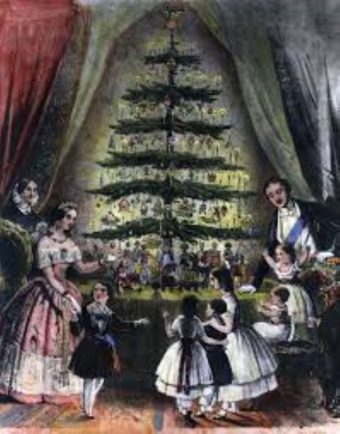
Decorating trees at Christmas was a festive activity popularised by Prince Albert. Inspired by his heritage, trees in the royal household were adorned with lit candles and trinkets and the interiors filled with evergreen decorations.
But Victoria and Albert weren’t the first royals to put up what is known today as a Christmas tree. George III married Queen Charlotte who, like Albert, was raised in Germany. Charlotte is credited with bringing decorated evergreen trees to England when she introduced their first Christmas tree at Queen’s Lodge, Windsor, in 1800.
Victoria and Albert are so closely linked to the tradition because they were famously illustrated standing beside a decorated tree with their children. The engraving was published in the press in the 1840s and it quickly took hold of the national imagination.
Turkey or festive bird for dinner
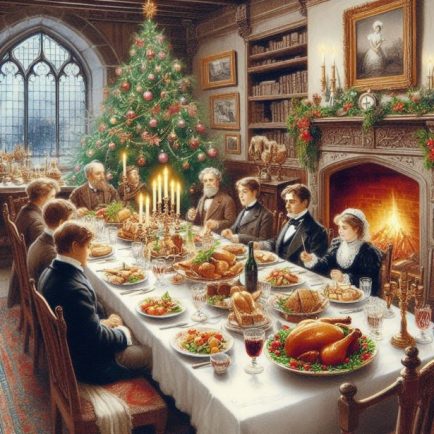
Victoria and Albert enjoyed turkey at Christmas. They would sit together as a family for their main meal and enjoy turkey with all the trimmings. Later they might indulge in a plum pudding.
Naturally finances influenced what families put on their Christmas tables, and the majority of people in Victorian England were not wealthy. Where possible a festive bird remained central to a family dinner and for many this would have meant a goose, like Charles Dickens illustrates in A Christmas Carol. Some even joined a goose club so they could pay in instalments throughout the year.
Giving gifts
Giving gifts at Christmas wasn’t a tradition the Victorians introduced, but they certainly made it a part of their family festivities. Presents were shared on the evening of Christmas Eve, rather than Christmas Day as is traditional in the 21st century.
In the royal household Queen Victoria insisted unwrapped presents be spread out across tables, as they did with royal birthdays. There are references in the queen’s diaries about the gifts she gave and received at this time.
Victoria and Albert famously gave each other jewellery, works of art, sculptures, paintings. Often the children and grandchildren would give the queen things that they would have made themselves like paintings, embroidery or handicrafts.
Poorer Victorians would have been forced to live within their means. Elaborate tables filled with gifts may not have been adopted by a more modest Victorian family, but the concept of sharing gifts was a part of the annual celebrations.
Plum pudding
Christmas puddings featured regularly on the royal dessert menu at Osborne, and are again referenced by Dickens as a treat enjoyed by regular Victorians. It was often served with a kind of sauce, perhaps an English custard or creme anglaise. But while a staple on the Victorian Christmas table, the humble pudding began as a pottage in the Medieval period.
Today brandy custard is a popular addition to the Christmas table and in a similar way to lighting modern puddings, Victoria and her family enjoyed a similar activity involving this ingredient, albeit with a slightly dangerous twist. They would set fire to a bowl of raisins soaked in some sort of alcohol and the aim was to extract as many raisins as possible from the bowl.