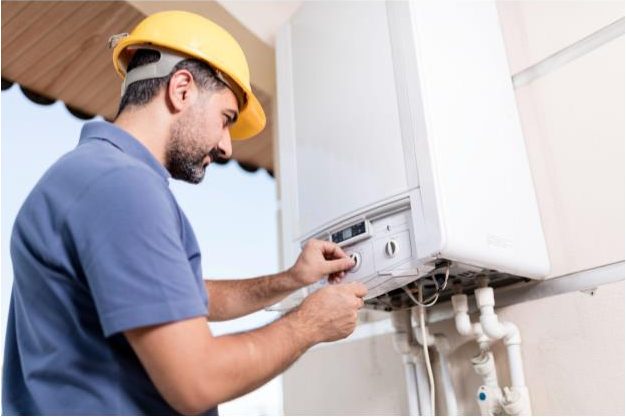
Boiler giant Worcester Bosch has faced criticism from the Competition and Markets Authority (CMA) over its recent ads for their hydrogen boilers. The ads in question list hydrogen boilers as a means of “future-proofing” homes, which prompted the watchdog to raise concerns about misleading claims. The boiler company has revised the ad in question.
The CMA has received formal commitments from Worcester Bosch to avoid making ‘misleading’ claims in their marketing. These mainly pertain to the ‘hydrogen-readiness’ of their boilers. The CMA raised concerns that Worcester Bosch’s claims might have wrongly suggested that purchasing one of their ‘hydrogen-blend ready’ boilers would help consumers lower their carbon footprint and future-proof their heating system when in reality, they would be in a similar situation as with other boilers on the market.
Last year, the consumer watchdog launched an investigation to determine whether Worcester Bosch had misled customers with ‘confusing or inaccurate’ statements in the advertising and labelling of their boiler products.
The investigation has now been closed after the company agreed to ensure that its marketing material would no longer mislead consumers about the environmental benefits and future-proofing of their boilers.
Additionally, the CMA was worried that the company did not properly clarify the uncertainties surrounding the potential future use of hydrogen for home heating. Many areas across the world are experiencing supply chain issues when it comes to hydrogen supply.
Several famous trials of hydrogen technologies have been scrapped by the UK government in recent years. Critics have decried the safety issues and supply chain problems that contribute to future issues with hydrogen proliferation.
Hayley Fletcher, interim senior director of consumer protection at the CMA, stated: ‘Our action, and the changes agreed with Worcester Bosch, will help ensure that consumers seeking a new heating system receive clear and accurate information’.
Are Hydrogen Boilers Effective?
Often, hydrogen boilers are compared to heat pumps as a means of cutting down operating costs and being better for the environment. This can be a more complicated discussion, however. There are many reasons why hydrogen can be at a deficit compared to both heat pumps and traditional boilers. Let’s first cover the positives.
Many engineers contend that using hydrogen-blend boilers, and eventually hydrogen-ready boilers, could be an easier transition away from carbon-based heating. They could be better for the average home than keeping standard gas boilers and are easier to install than heat pumps. However, that’s not to say they don’t come with their own issues.
One of their positives is that they are similar to gas boilers and won’t require as much of an overhaul. In the long run, hydrogen may cause less disruption for consumers than heat pumps. Hydrogen would also have a low to medium impact on the heating industry, while heat pumps would require significant industry changes and the retraining of hundreds of thousands of professionals.
Additionally, installing a hydrogen boiler is expected to be much cheaper than a heat pump. Currently, heat pump installation can cost several thousands of pounds. Even with the £5,000 to £6,000 discount through the Boiler Upgrade Scheme, heat pumps could set you back a fair bit, depending on the type of installation.
Furthermore, major boiler manufacturers like Worcester Bosch have stated that hydrogen-ready boilers cost about the same as natural gas boilers. This makes them far more accessible, possibly meaning purchase and installation costs that are far lower than those of heat pumps (around £1,000 to £2,000, which is the average cost of a replacement combi boiler installation).
On the other hand, heat pumps are a much more standalone technology, utilising renewable sources and electricity rather than gas. While heat pumps need to be produced, installed, and maintained, hydrogen boilers would also require workers to generate hydrogen and distribute it through existing networks.
Requiring energy-intensive production, hydrogen (despite its clean-burning fuel upon use) is manufactured using energy-intensive methods. This could be a net negative for the environment, especially since the most common method, steam methane reforming (SMR), relies on natural gas and releases greenhouse gases. This can be stymied with carbon capture technologies but can still produce undesirable emissions.
On top of that, the physical supply chain is also an issue. This can make these fuels inconvenient or costly to transport en masse in a way other fuels aren’t. Due to its lower density, hydrogen gas necessitates specialised storage and transportation, which can be prohibitively expensive to establish and maintain. While many have proposed retrofitting gas pipelines for hydrogen transportation, this could be incredibly expensive.
Similarly, heat pumps have a far lower operating cost compared to hydrogen boilers due to their superior efficiency. Hydrogen has to go through many steps before it is ready to produce heating and hot water, with each step decreasing efficiency. The technology may improve, but it’s not competing well with heat pumps when it comes to energy efficiency.
The question of whether hydrogen boilers will become the future is still up in the air. They can be a strong choice in terms of price, but it’s undeniable that there are concerns about supply and operating costs.
Article written by Rawal Ahmed